Select Page
The Difference Between a Fashion Designer & a Tailor… Updated 2019

The Difference Between a Fashion Designer & a Tailor… Updated 2019

Β 
Β vsΒ Β 
Β 
SO I’ve been meaning to write on this topic for a while now…. and I finally decided to do so after having yet another chat with a top don in the Nigerian Fashion Industry who felt the same way I did about the craziness that goes on around here. Β 
Β 
The first time I was asked this question was on some TV interview a while back and of course I answered the question without batting an eyelid. Β πŸ˜€ Β But since then, I have asked both new and practising designers the difference between the two terms and it turned out that whilst everyone, more often than not, knew who a designer was, none of them actually got the definition of a tailor.
Β 
So here we are setting the record straight…. with of course “The University of Google”, “The Internet Institute” & “The Wikipedia College” to support my claim.

So who is a fashion designer? Β 

My answer?!

Β 

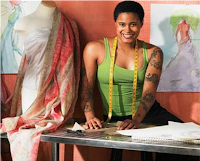
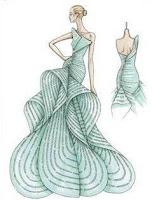
A fashion designer is the creative mind behind any item of clothing, be it a high fashion runway garment or your regular pair of jeans or tee shirt. Β They conduct research, develop a concept and vision for the type of person they would like to dress, create a visual image of their concept through sketches (or drapery) and oversee the various design and production processes that bring their sketches or designs to life in the form of a three dimensional garment to fit their muse or intended market. Β 


In other words… a Β fashion designer is the “brain” behind any garment produced. Β S/he sees the finished garment in his/her mind, documents it on paper in the form of a sketch (or drapes it on a mannequin) and brings together a strong team of skilled people to assist him in the construction of his idea into a “wearable” or better still “physical” garment.


For example…

…a designer visualizesΒ and turns it into…Β 
Β 

NOW! Β Must a fashion designer necessarily have his own clothing line or engage in bespoke services? Β Nope. Β Must a fashion designer sew? Β Nope. Β If he has the skills and chooses to, why not?! Β However, in my opinion, ifΒ he wants to run a proper business, he has no business sewing BUTΒ needs enough knowledge to guide his team. Β Β Β 


Ok… so let’s see how I did. Β I always like backing up my statements with research. Β 

Β 
Wikipedia says: Β “AΒ fashion designerΒ conceives garment combinations of line, proportion, color, and texture. While sewing and pattern-making skills are beneficial, they are not a pre-requisite of successful fashion design.” A-ha! See…?!

And now ON to the JAMB question. Β 


Who is a tailor? Β 

This is where most people bungle. Β 

The usual answer I get is “a tailor is someone who just sews or joins the garment”…or something along those lines. Β You know what the problem is? Β Many of us assume that the term “tailor” refers to the people many of us love to yell at for wrecking our clothes almost every time. Β In fact, more often than not, when one is called a tailor, we consider it a derogatory term.Β Β But the truth is, the word “tailor” has really been abused in this environment. Β 

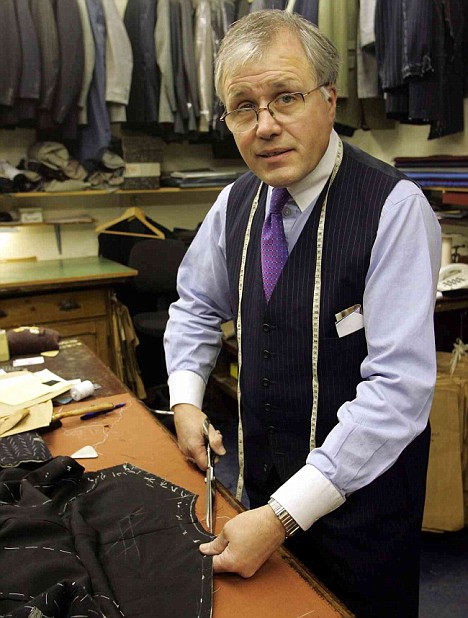
In my opinion, to be called a tailor is actually an honour! Β Why you ask? Β Think of the term “tailored garment”… and go on to think of Oswald Boateng and other Savile Row Tailors. Β And tell me why should I not be proud to be called a tailor?! Β In fact, look at these images and tell me they are not a far cry from our local definition of tailor.

Β 
Images obtained from the web
Β 

A tailor, in my opinion, is a true master and “architect” of clothing. Β He makes customised clothing, particularly suits and tuxedosΒ for a select number of clients, considering their unique peculiarities and goes through a painstaking process of pattern making and intricate garment construction techniques including handwork and various fittings to come up with an awesome garment with perfect finishing for his, usually, high-end client. Β 

In fact Wikipedia defines a tailor as “a person who makes, repairs, or alters clothing professionally, especially suits and men’s clothing.” Β It says further that “the term refers to a set of specific hand and machine sewing and pressing techniques that are unique to the construction of traditional jackets.” Β So we can safely conclude that clothes made by tailors will be very expensive. Β They have to be. Β I make suits and I know the stress that goes into it and I can’t charge less than a certain amount for mine much less these guys. Β I guess we can also add that if you do not make men’s clothing, particularly suits, you should not call yourself a tailor. Β  Β 
Β 
SO I ask… must a tailor know how to sew? Β I would definitely say yes …if he has to go through those tedious processes. Β But truth is in reality, he probably just creates the patterns (or guides the pattern maker) and passes it on to his production team so he can busy himself with other work.
Β 
Ok so now…if our local tailors are not tailors, then what do we call them? Β Let’s see if we can come up with an answer by asking some questions.
Β 
1. Β Do they make customized clothing? Β Yes! Β Ok, forget the fact that they alter it like 50 odd times… but truth is, every garment needs a fitting before it is finalized. Β Note that in the picture, the tailor does a fitting even before inserting the sleeve. Β  So I really cannot understand why people here are so averse to fitting… like they expect it to be done right the first time. Β I actually have the greatest respect for them seeing they can churn out clothes in one day and sort of get it and you guys really should give them a thumbs up! Β 
Β 
2. Β More importantly, do they make suits? Β More often than not, NO! Β 
Β 
3. Β Do they go through the many processes and pay strict attention to detail? Β Errrr…. I would say NO! Β Very few of them do. Β 
Β 
4. Β Do they create patterns? I think it’d be safe to say NO (though I watched an online video once of a tailor who didn’t create a Β pattern). Β 
Β 
Ok seeing they do not qualify in 3 of the 4 areas above, what do we call them then? Β 
Β 
I, personally, would call them machinists (or joiners as is the common term here), perhaps even seamstresses (for the females) but definitely not tailors. Β However, I have chosen to use a better accepted term here for the sake of blending into the Nigerian Fashion Industry. Β I would choose to use the term “local” or “roadside” before the tailor. Β Afterall, we need to give them credit for attempting to create customized clothes for their customers every time. Β Β 
Β 
SO in true primary school debating lingua I conclude by saying:
Β 
“Ladies and Gentlemen I hope I have been able to convince you and not confuse you of the difference between a fashion designer and a tailor”.
Β 
Thank you! πŸ˜€
____

PS. All pictures culled from the internet.


PPS. Β If you liked this article, please share with your friends and those who need the knowledge by clicking on the Facebook, Twitter and Google+ icons below. Β Muchos gracias! Β  MWAH! Β πŸ˜€
Growth Tip: Outsource to Grow Your Fashion Business

Growth Tip: Outsource to Grow Your Fashion Business

⁣As a fashion business owner you might find out you are being less productive because you’ve gotten to that point where, there’s just not enough hours in the day to get things done.  As you take on new clients or new responsibilities and have new products that you’re launching, you get to a point where you’re overwhelmed and you can no longer manage everything. At this point you should consider outsourcing.

​

Why You Need to Outsource

β€œhe more operational you are, the poorer you become”

Deji Agboade, Growth Lab

Being too operational stops you from focusing on what matters the most, strategy, deep thinking and networking to grow your fashion business. You are constantly overworked, tired and too grumpy to think of better ways to grow the business. And worse, you end up losing so much money in reality than you think you are saving.

Outsourcing your work can help your business save money, assign specific work to specialists, save time, and expand your offering. 


It is important to think about the opportunity costs of taking on certain tasks. Time is your greatest asset. As Warren Buffet said, β€˜As rich as I am, the only thing I cannot buy back is time’. So you need to think about how to save time as much as possible.


For example, you might think you are saving money by going fabric shopping yourself. But are the cost savings really worth it? You spend hours in traffic getting there, spend hours walking around the fabric stores and then you spend another set of hours getting back. You are tired, you are probably frustrated and all you want to do is sleep to recoup that lost energy.


However if you engage the services of a fabric shopper, they take on all that task including the traffic, the walking around and the haggling of prices. S/he will charge for the service but it will leave you to focus on the core of your business, think clearly and make even more money.


What Can You Outsource

In addition to the above example, you can outsource many tasks. Duties like clothing production, digital marketing, customer support, invoicing, shipping and so much more can be given to someone else. Taking these tasks off your desk frees you up to focus on growing and improving your business.  Plus it also helps to grow the economy – which is the bigger picture.  Similarly, it is important for players in the industry to specialize and carve a fashion brand niche for themselves so they become top of mind when designers need their services.


If you’re looking to increase capacity, expand your offering, or improve your skill set, there’s no easier or more affordable way than through outsourcing.


Do you currently outsource? What has your experience been like? Share in the comment section below.

Recommended Resources

Specialization in the Fashion Industry

Finding Your Fashion Brand Niche

How to become less operational in your business so you can make more money

Why Outsourcing is good for your business

Want to Specialize in an Area of the Fashion Industry? 

About Me

Tope Williams-Adewunmi

Tope Williams-Adewunmi

A fashion entrepreneur passionate giving power through fashion

by sharing knowledge guaranteed to help fashion lovers

turn their love for fashion into a viable business.

Someone you know needs this article.  

If this helped you, help them out by sharing this article on social media.

To get notified about our articles, please sign up below:

Getting your Fashion Business Ready for 2020

Getting your Fashion Business Ready for 2020

⁣It’s amazing to think we are almost at the end of a decade ?, and while 2020 always sounded like the distant future, it’s almost here.  While it may be tempting to kick back, relax, and let things go during the festive season, use the end-of-year as an opportunity to take stock of what’s happened during the past 12 months and make plans for the 12 to come.

2020

From getting your finances in order to shaping up your staffing, here are some of the most important activities to do now if you want your fashion business to be ready for the New Year:


1. Run Your Financial Reports


By running your financial reports , you can get a better understanding of how your business is performing financially.  Don’t have an accountant to help out with these tasks?   Software programs like Intuit QuickBooks, FreshBooks, and Wave are great for that.  

fashion entrepreneurship course flyer

If you a completely clueless about accounting, numbers and figures, then you should take our Online Fashion Entrepreneurship Course which breaks it down in simple understandable terms.  I have found that it is important to even have an idea of the numbers in the event whereby your accountant may not be knowledgable.  I have had to argue some issues with some accountants I have tried to work with in the past. Thankfully I have an accounting background and I did ICAN so I was able to challenge some of their positions because their treatment of certain items were completely wrong.  

​
2. Consider Future Goals & Plan


Take a good, hard look at your accomplishments this year. If you aren’t meeting your goals, it might be time to reevaluate your business practices. Perhaps you did not make as much profit as you expected.  Try to figure out why.  Are you using up your cash flow to buy assets? Are too many people owing you money? What worked this year and what didn't?  What do you plan to do differently next year?  How do you plan to minimize cash flow? What lessons did you learn this year that will be detrimental to you next year? It is time to check out your strategy and work on a solid plan to meet your goals for 2020.

perfect your patternmaking


3.  Get the Required Knowledge to Upgrade your Skills
​

If you are lacking in certain areas or need to upgrade your knowledge and skills and improve your income, now is the time to secure all needed admissions and registrations against next year.  Often times, we fail to invest in the knowledge we need to move our businesses forward and end up paying for it in other ways.  When you calculate the opportunity costs, you are better off paying for that Course now than after you have lost so much money.  Investing in that knowledge also ensures that you put the rights things in place to earn a higher income or save on costs.


4. Sit Down with Your Team


As the current year winds down, schedule some time to speak to your team members one on one. Inform them about areas they need to improve, let them know what they’re doing well and encourage them to keep it up in the New Year.  It is also important to ask them what they think worked and what did not.  It might also be time to make some harsh decisions and shut down certain departments that are gulping up your profit.  Or let go of those people who are causing the business more harm than good.

Increase your social media presence

5. Work on your online presence


Now is a good time to review your digital strategy, so take some time to look at your engagement statistics and start brainstorming some ideas to improve your numbers.  Monitor your analytics closely. Know what works and what does not work.  Most digital marketers only focus on driving traffic to the site but if it hurts your bounce rate, then you are better off not running as many ads.  And if the traffic does not result into a conversion, it also becomes pointless.  Truth be told, it does take a while before the results from digital marketing are seen but keep at it and watch your metrics carefully.  And more importantly find someone who knows what they are doing. It goes beyond just running social media ads. 

take a break


6. Take a Much-Needed Break


As a business owner, you must aim to take a little time for yourself. Plan a few days away from it all when you can relax and recharge.  If you don’t take care of yourself, who will? ? I know it's hard and we are all quilty but one of the most important plans for next year is that break from it all.  The life expectancy rate is reducing and you need to ask yourself if it is all worth it if you end up spending it all on drugs.  stress wrecks a lot of havoc on the system so when your body calls for it, take that break!​

2020 would be a turning point for many fashion brands, and to be a part of those it’s essential you get started now.  Remember the planning starts today not in January.  If you fail to plan, you plan to fail! Get that vision board out, get your budgets done, get the much needed rest and enjoy the holidays so you can start the year off with a bang!

Recommended Resources

What to Do When You Feel Like a Business Failure

Specialization in the Fashion Industry

Finding Your Fashion Brand Niche

Fashion Business Growth Tip: Develop Your Unique Selling Proposition

Boost your Income in 5 easy steps

About Me

Tope Williams-Adewunmi

Tope Williams-Adewunmi

A fashion entrepreneur passionate giving power through fashion

by sharing knowledge guaranteed to help fashion lovers

turn their love for fashion into a viable business.

Someone you know needs this article.  

Help them out by sharing this article on social media.

To get notified about our articles, please sign up below:

December 2019! Now is the time to plan for 2020

December 2019! Now is the time to plan for 2020

I saw this quote this morning and felt a bit justified by the lack of sleep I have had this past week. I’ve been up since 4am (nothing to brag about). My body aches and I need to rest but I know now is the time to plan for the New Year.

It’s December and people are pretty much on shut down mode. Everything is on hold till 2020. And the same cycle continues every year. The same resolutions which ends up getting broken by the end of January. Why? Because the planning was left till the New Year!

As an entrepreneur, now is not the time to shut down. If you want 2020 to be even better than 2019, NOW is the time to work even harder! Do not procrastinate. By all means look forward to the holidays. Slow down but don’t shut down. Plan for the tomorrow you want today!

Have a great week all.

How to find customers and increase sales

How to find customers and increase sales


So we had a good business session LIVE on Instagram on finding customers with business development expert @nedum_e .  In the video, he mentioned terms like product market fit, customer journey, functional and emotional need, etc  - things I had heard about but never really thought about. Things every business person needs to know about in order to increase sales.  Sorry I didn't have time to create a flyer or send a broadcast but if you missed it, you can check out the video again by clicking this link. 

Finding Customers & Increasing Revenue

Don't forget to subscribe.

The next video with Chinedum continues next Thursday at 9pm. If you need to increase your revenue, you don't want to miss it!

About Me

Tope Williams-Adewunmi

Tope Williams-Adewunmi

Fashion Entrepreneur

I am passionate giving power through fashion by sharing knowledge guaranteed to help fashion lovers turn their love for fashion into a viable business.

Someone you know needs this article.  Help them find it by sharing it on social media.